When can walls get foam?
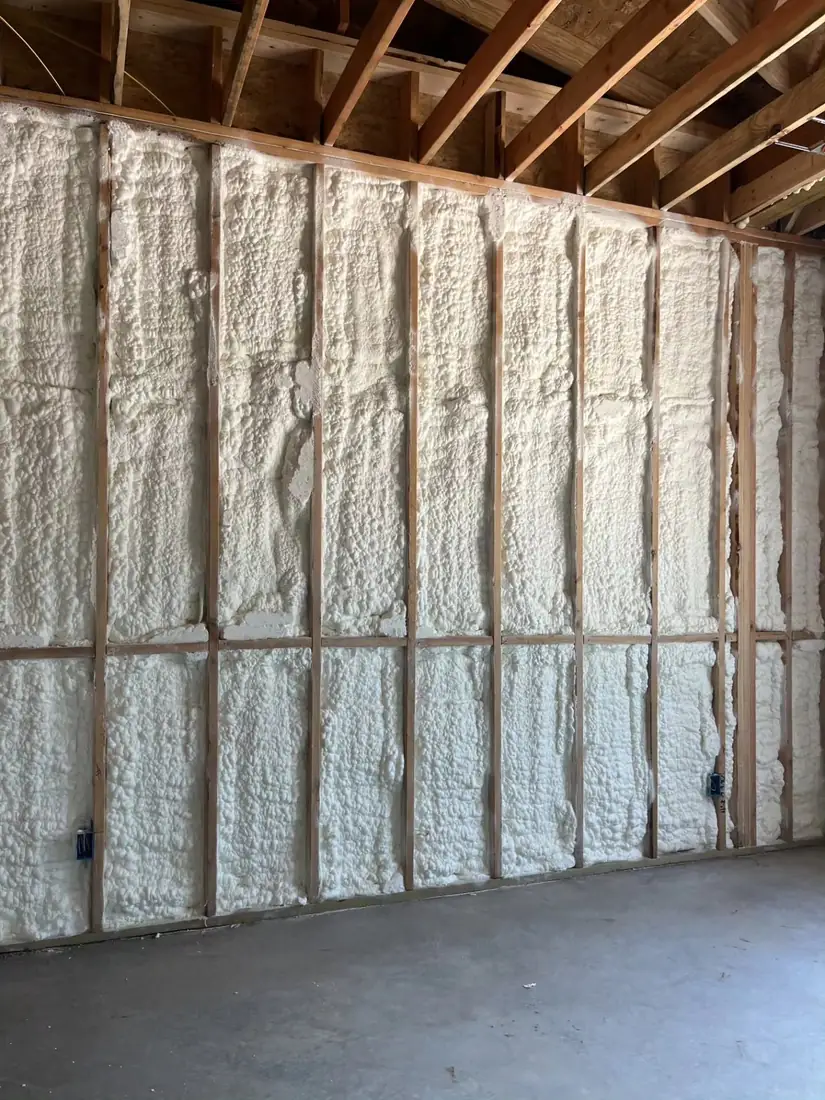
During new construction, after rough-in inspections and before drywall. During a remodel, any wall that's opened up. During an addition, the new framing. If your walls are closed and staying closed, spray foam isn't the tool, and we'll say so rather than sell you a job that doesn't fit.
Open cell for interior walls
Open cell is soft, and soft absorbs sound. Between bedrooms, around a bathroom, on a media room wall, or between a shop and an office, it takes the edge off noise in a way batts don't. It's the lower-cost foam, which makes it an easy add while the walls are open anyway.
Closed cell in exterior walls
A 2×4 wall only has so much room. Closed cell packs more R-value into those inches than anything else and acts as a vapor retarder at the right thickness, which matters on walls that face weather. It also adds stiffness to the wall it's sprayed in.
A thin layer of closed cell against the sheathing for the air seal and moisture control, then a batt for the rest of the depth. It's a real option when budget matters, and we'll quote it if it fits your wall.
Electrical and plumbing
Rough-in happens first. We spray around the wires, boxes, and pipes that are already there. Foam is compatible with standard residential wiring. One honest note: foam fills the cavity, so a future repair behind that wall means cutting foam out. It's not hard, but it's worth knowing going in.