Where does the foam go?
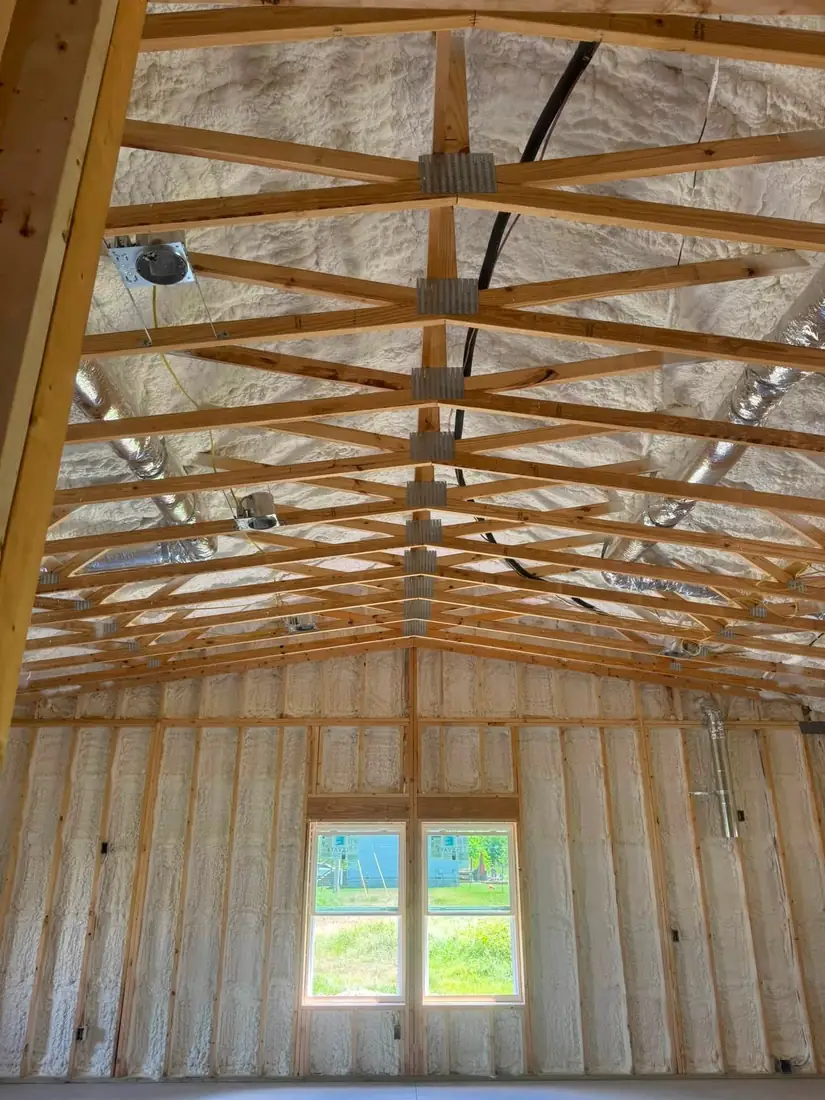
Attic floor means the foam goes on top of the ceiling drywall, between the joists. The attic stays vented and hot; the living space below is sealed off from it. Roof deck means the foam goes on the underside of the roof sheathing and the gable walls. The vents get sealed and the attic becomes a semi-conditioned space.
Why the roof deck when the HVAC is up there
An air handler and ductwork in a vented attic spend every summer afternoon in 120° to 140° air. Every leak in the ducts, and there are always leaks, pulls that air into the system. Foam the roof deck and the attic drops to within a few degrees of the house. The equipment runs in reasonable air, the duct leaks stop hurting you, and the second floor stops being a different climate.
What about the old insulation?
For an attic-floor job, we can often spray over or alongside existing material after sealing the penetrations. For a roof-deck job, the old floor insulation usually comes out so the attic can share air with the house. We tell you which on the site visit.
Will my roof get hotter?
Shingle temperature rises a little over an unvented roof deck. Shingle manufacturers publish their position on unvented assemblies; ask and we will point you to it for your brand. What we do not do is spray over a deck that's already wet or soft. We look first, and if something needs a roofer, you hear it before we quote.
Recessed lights need to be IC-rated to be covered. Bath and kitchen fans need to exhaust outside, not into the attic. We check both before we spray.
How long does an attic take?
Most attics are a one-day job, including prep and cleanup. Larger or more cut-up roofs can run into a second day. You will know from the quote.