Subfloor or crawl space walls?
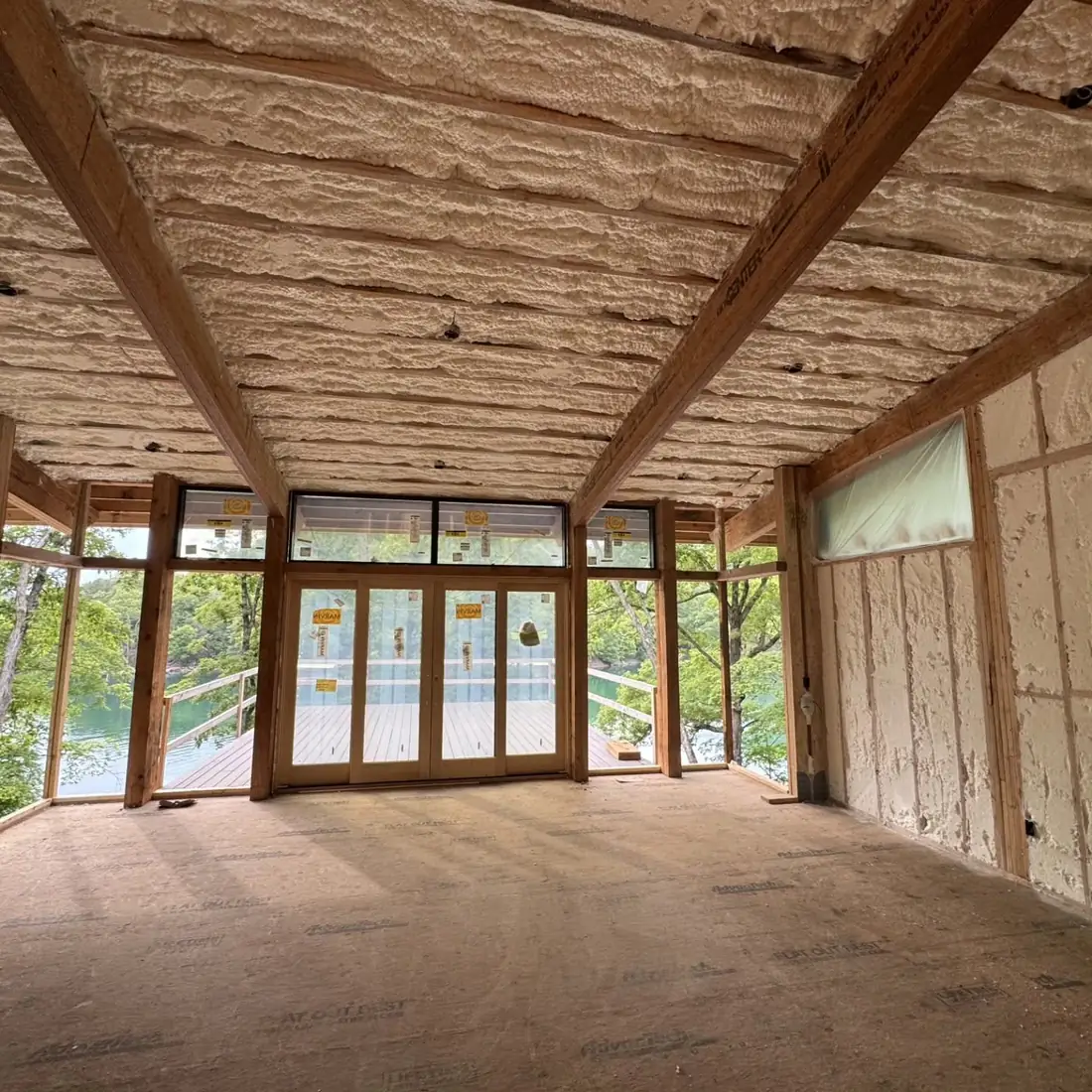
Subfloor: foam goes on the underside of the floor between the joists. The crawl space stays vented and outside; the floor above gets warm and sealed. Crawl space walls: foam goes on the foundation walls and the rim joist, the vents get sealed, and the crawl space becomes part of the house, which also protects ducts and pipes down there. Which one fits depends on your moisture situation and what's under the floor.
Why closed cell down here
Crawl spaces are damp. Closed cell doesn't absorb water, holds its shape, and becomes a vapor retarder at the thickness your quote specifies. Open cell in a crawl space is the wrong tool and we don't put it there.
Fix the water first
Foam is not a drainage plan. If there's standing water, a grading problem, or a plumbing leak, that gets handled before we spray, and we'll tell you if we see one. A ground vapor barrier is part of most crawl space jobs; we scope it with the quote.
Anything with an open underside loses heat straight down. We've sprayed the bottom of tiny homes and cabins across NWA, and it's often a half-day job that changes how the floor feels all winter.
Frozen pipes and cold ducts
Pipes and ducts in a vented crawl space live in outside air. Sealing the crawl space brings them into the house's air, which is the most reliable fix for a pipe that's frozen before. Foam on the subfloor alone helps the floor but leaves the pipes where they were. We'll tell you which approach solves your actual problem.