
Sharp Spray Foam Insulation emblemSharp Spray FoamInsulation · NWA
Homes, new and old · Northwest Arkansas

Spray Foam for Homesin Northwest Arkansas.

New construction or a house you've lived in for twenty years. We seal attics, walls, floors, and roof decks so the room you're in holds the temperature you set.

Call 479-435-1632
5.0 on Google · 13 reviewsFully insuredFree estimates
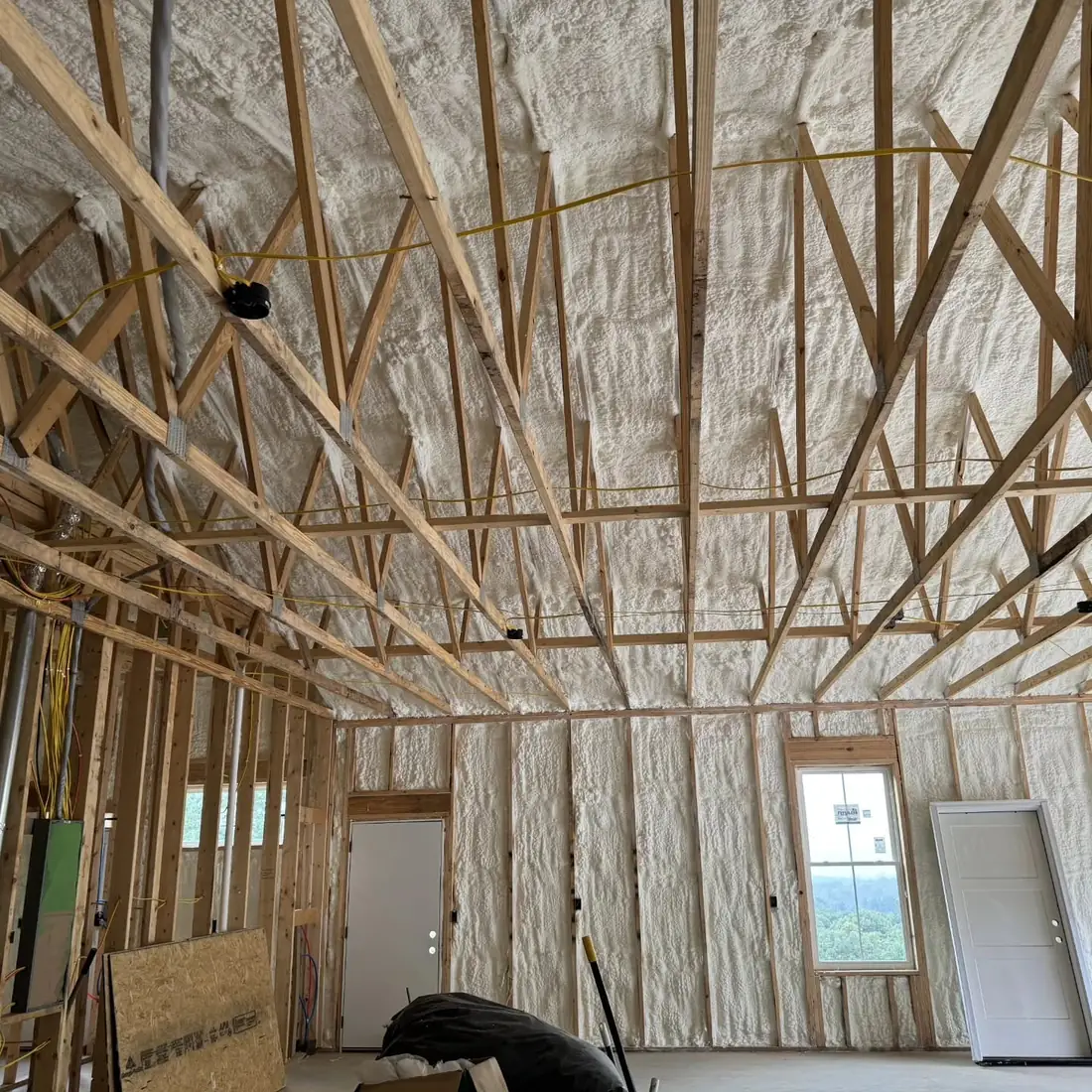
Spray foam insulation by Sharp Spray Foam: Home with spray foam insulation on a vaulted ceiling and walls
Home · vaulted ceiling and walls · NWA
Know the signs

Is this the job you need?

Signs it's time

  • Rooms that never match the thermostat
  • Upstairs hot in July, cold in January
  • Drafts at outlets, can lights, and baseboards
  • A utility bill that climbs every year
  • Dust and outside noise getting in anyway
  • A new build you want done right the first time

What we look at

  • Attic floor or roof deck, and which one fits your HVAC layout
  • Exterior wall cavities and rim joists
  • Floors over crawl spaces, garages, and porches
  • Where the air is leaking, before we pick a foam
Real work · this service

What it looks like done

Sharp Spray Foam jobs across Northwest Arkansas. Tap to enlarge.

The guide

Spray foam for your home: what it does, where it goes, what to expect

Most homes in Northwest Arkansas were insulated with fiberglass batts or blown-in, which slow heat down but do nothing about air moving through the walls and ceiling. Spray foam does both jobs at once. Here is how it works in a house, where it pays off most, and what install day looks like.

What does spray foam do that batts don't?

Fiberglass insulates the middle of a stud bay and leaves gaps at the edges, around wires, and behind boxes. Air moves through those gaps year-round, carrying heat, humidity, and dust with it. Spray foam expands into the cavity and bonds to the framing, so the wall or ceiling is insulated and air-sealed in one pass.

That is why customers notice the change the same week. The thermostat setting starts to mean something in every room.

Open cell or closed cell for a house?

Open cell is the common choice for attics, roof decks, and interior walls. It expands more, costs less per job, and quiets a room. Closed cell goes where moisture or limited depth is part of the picture: crawl spaces, rim joists, basement walls, and exterior walls when a high R-value in a thin wall matters.

How we decide

We look at the space first. Your quote names the foam, the thickness, and where each one goes. If you have a preference, say so and we'll tell you whether it fits.

Attic floor or roof deck?

If your air handler and ducts are in the attic, foaming the roof deck brings all of that equipment inside the insulated envelope. The attic stops hitting 130° in August and the ducts stop losing cold air to it. If the HVAC is elsewhere and the attic is storage only, insulating the attic floor can be the simpler job. Each house gets its own answer. More on attics and roof decks.

What happens on install day?

We cover windows, fixtures, floors, and anything staying in the space before the first pass. The foam is sprayed, expands, and cures. You stay out of the work area during application and for the period we give you on the job, which comes from the product manufacturer. Then we trim overspray, clean up, and walk the work with you.

  • Clear the work area of furniture and anything you don't want covered.
  • Plan for the house to be ventilated during and after the spray.
  • Pets and kids stay out of the work zone until we say it's clear.

New construction: when do we come?

After the electrical, plumbing, and HVAC rough-ins have passed inspection and before drywall. Builders usually give us a few days of notice and we fit the spray between trades. If you are a builder, wall insulation covers how we handle framing-stage work and attics and roof decks covers the top of the house.
How it works

From first call to finished foam

  1. Tell us about it

    Call, text a photo, or use the quote form. Building type, what needs insulating, and the city.

  2. Talk through the scope

    We confirm the details, settle open vs. closed cell, and flag anything that affects the number.

  3. Get your quote

    A clear price for the work described, good for 30 days. No surprise line items after the fact.

  4. We spray, then we clean up

    Fixtures, windows, and floors are protected before the first pass and left clean after the last one.

Google reviews

What NWA customers say

★★★★★
“Excellent service from start to finish! The team was professional, punctual, and very knowledgeable. They explained the entire insulation process clearly and completed the job efficiently. I noticed an improvement in my home's comfort almost immediately.”
Griselda G.Home · Google review
★★★★★
“They explained the entire process and did an outstanding job insulating my home. I noticed an immediate improvement in comfort and energy efficiency. They left the work area clean and completed everything as promised.”
Silvestre A.Home · Google review
★★★★★
All 13 reviews, straight from Google.
Read them all →
Questions

Common questions

Can you insulate a finished house without tearing out walls?

Attics, roof decks, and crawl spaces usually need no demolition. Exterior walls do, because spray foam needs open stud bays. If your walls are closed, we'll say so and tell you what the practical options are.

Will spray foam lower my electric bill?

Less air leaking out means the HVAC runs less, and customers tell us they notice the difference. We don't promise a percentage, because every house, system, and thermostat habit is different.

Does it smell?

During application and cure, yes. You stay out of the space for the time we give you on the job, and we ventilate. Once cured, the foam is inert and the smell is gone.

How thick will the foam be?

It depends on the foam type, the assembly, and the target. Your quote lists the product and the thickness for each area so there are no surprises.

Ready to fix the residential problem?

Tell us about the space. We'll tell you what it takes and what it costs, before anyone shows up with a hose.

Call 479-435-1632
Call Now